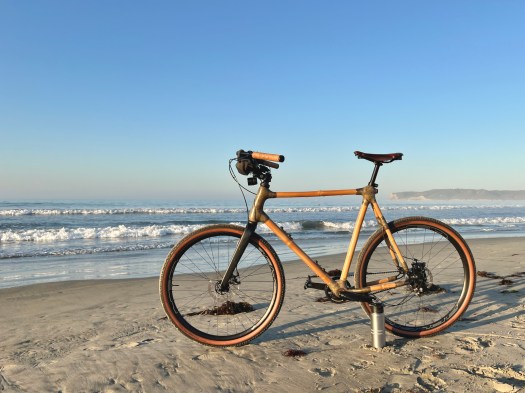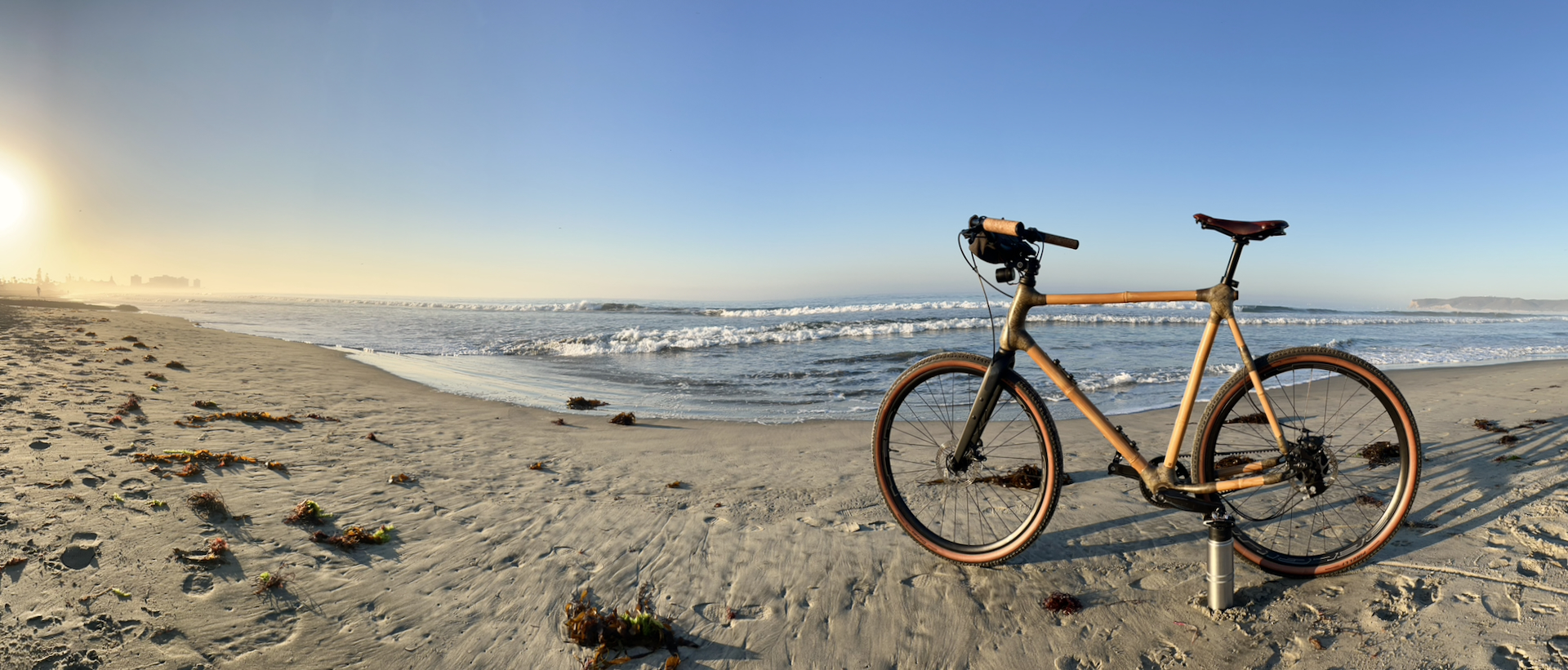
Yes. Sourced from a farm in North Carolina via Etsy, the species is phyllostachys parvifolia. It grows tall and tolerates cold weather.
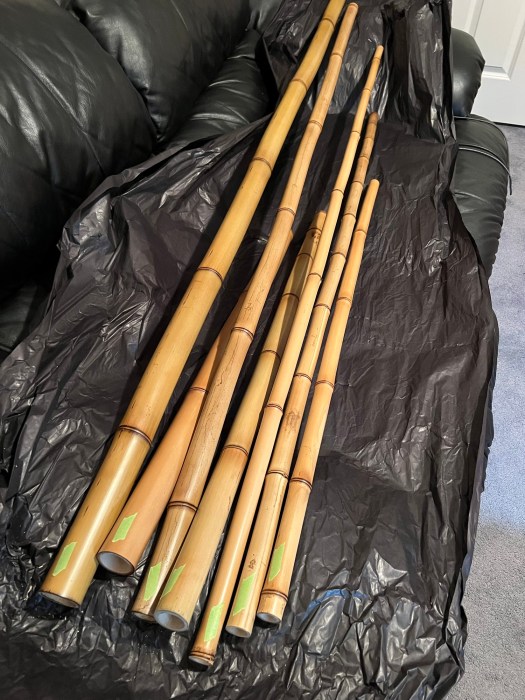
Bamboo is amazingly strong. Pound for pound, the toughest varieties have a higher tensile strength than steel and resist compression better than concrete.
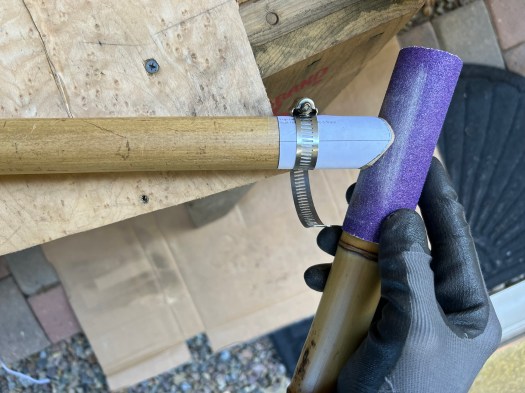
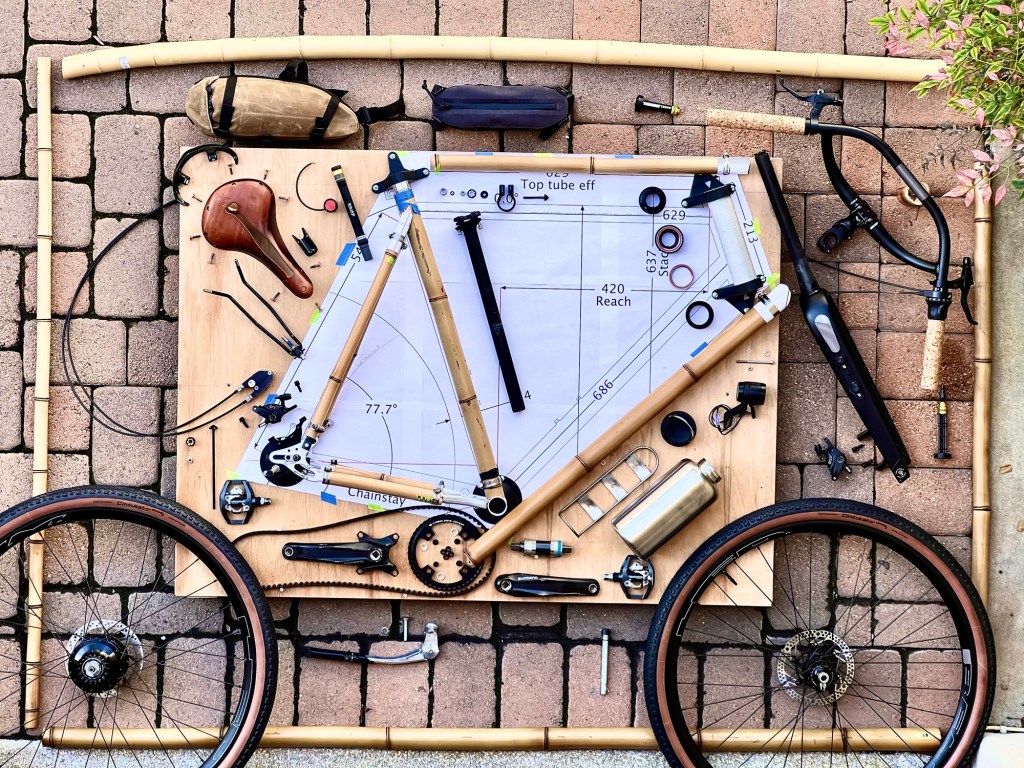
The lugs are constructed by wrapping with natural hemp and flax fibers soaked in epoxy resin. The ends have lightweight aluminum reinforcements to help support the bottom bracket, head tube, seat post, and dropouts. These help spread the localized loads where bearings are pressed in and parts are bolted and clamped to the frame. The bamboo is structural and fully supports the weight of the rider. There are no additional reinforcements inside the bamboo tubes.
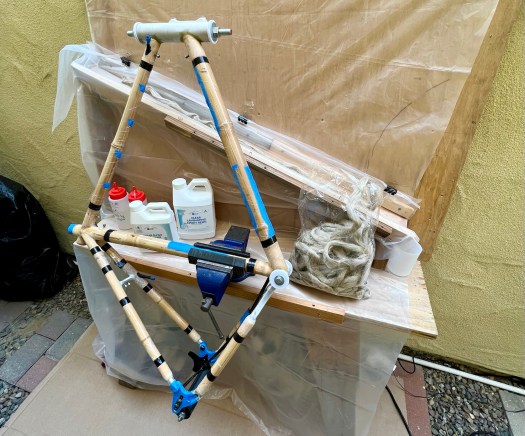
It is comparable in weight to an aluminum frame—lighter than steel, but heavier than high-end carbon fiber. The internally geared hub also makes it a bit heavier.
Bamboo naturally absorbs road buzz and high-frequency vibrations far better than aluminum, steel or carbon fiber. An expert frame builder can make the frame as rigid or as supple as desired by carefully selecting bamboo poles by diameter and wall thickness.
I’m an amateur bumbling my way through my first frame build so I just took a rough Internet average and went slightly bigger. I needed a heavier bike because I plan to take it on back country adventures with camping gear so it needs to withstand some abuse and still bring me back home.
I mean it looks cool and all but if bamboo is so great wouldn’t every major bike brand be making bamboo bikes?
After spending a few weeks reading about the benefits of bamboo and working it with my own hands, I found myself wondering, “Why aren’t all bikes made out of bamboo?” I was initially drawn in by the unique aesthetic, encouraged by stories of bamboo bikes that have withstood many years of daily use and ultimately sold on the low technical barrier to DIY fabrication. The renewable nature of the material and vibration damping were just icing on the cake.
After spending a few months working with it, I understand why bamboo has failed to gain wider adoption. Construction is labor intensive, which translates to higher costs and lower profit margins. As a natural material, bamboo has a lot of variability. Each tube is unique in size and shape. They are all tapered, bent and not-quite-round. This does not fit easily into modern mass production, safety testing and certification. Aluminum, steel, carbon and titanium are well established and consistent from batch to batch. This makes them difficult to displace in both the vendor’s and the buyer’s imagination as an appropriate material for bicycles.